
Umbrian Pecorino Cave-Aged: Ancient Craft & Bold Flavors
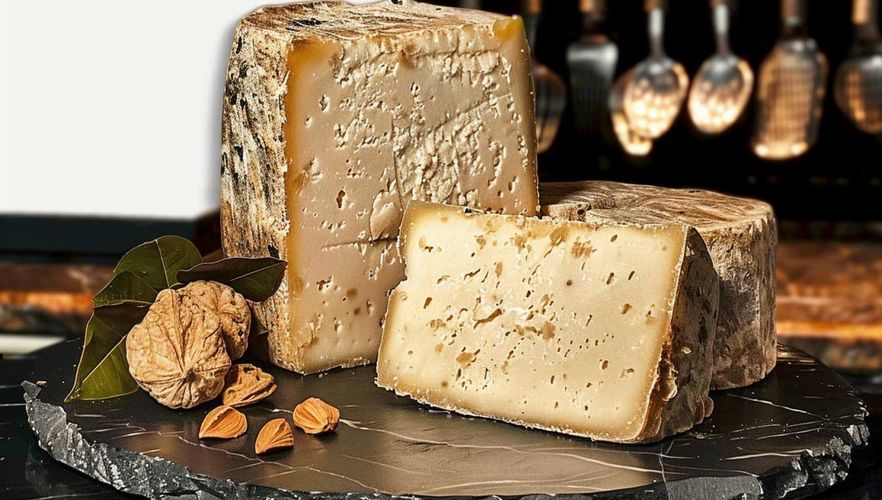
Umbrian pecorino is sheep's milk cheese from a small region of central Italy, and its most distinctive form is aged underground, in a pit. This guide explains the main types and how to choose between them.
We will cover what it is, how it changes from young to aged, what pit aging does, the family of pit-aged versions, how it differs from other styles, how to pair it, and how to serve it.
Contents
- What is Umbrian pecorino
- From young to aged
- Pit-aged pecorino
- The fossa family
- Other styles
- How to choose
- Wine pairings
- Serving and storage
- Questions
- Where to buy
What is Umbrian pecorino
Pecorino means sheep's milk cheese. In Umbria it comes mostly from small dairies tied to local pasture. Two things shape it: the milk, marked by the herbs the sheep graze on, and the aging, which sets its texture and strength.
Under one name you find very different cheeses, from soft and mild to hard and sharp, plus versions worked with truffle or wine, aged under ash, or matured in a pit.
From young to aged
Aging is the variable that changes the cheese most, and the first thing to check. Young, after a few weeks, it stays soft and milky, mild, good on bread or in salads. After a few months the paste firms up and the flavor turns fuller and saltier. Past a year it dries, crumbles, and becomes sharp and lingering, a cheese for the end of a meal or for grating.
Pit-aged pecorino
The most distinctive Umbrian pecorino is aged in a pit, underground. The wheels are sealed in cloth sacks and lowered into the pit, where they ripen with little oxygen and under the weight of the ones above. That airless rest concentrates the flavor, deepens the aroma with woodland notes, and leaves a dark rind that is not for eating.
In the Monte Cucco area, in the eastern Umbrian Apennines between Gubbio and Gualdo Tadino, this cheese is known by its Italian name, pecorino umbro etrusco di fossa, which simply means Umbrian pit-aged sheep cheese. The name ties it to the area's ancient roots and to the old habit of keeping food safe underground in times of war. Read it as the product's identity, not as a precise date in history. It is a local, small-scale cheese, not an industrial one.
The fossa family
The same pit aging gives several versions. The base is always the rest underground; what changes is what the wheel rests among.
Alongside the classic pit-aged pecorino there is the version aged in Merlot grape skins, the one aged among fig leaves, and the one aged among walnut leaves. Each adds a different aromatic note to the same underground base.
Other styles
Not every flavored pecorino is pit-aged. The truffle pecorino comes from the same maker as the pit cheeses, but it does not spend long underground.
The ash-aged pecorino and the pear versions come from other local dairies instead: good Umbrian cheeses, but a different method and a different story from the pit. Worth knowing when you choose, so you do not mix up styles that look close but are not.
How to choose
Start from how you will use it. For everyday eating, sandwiches, or a light board, a young or lightly aged wheel is the easy choice. For the end of a meal, a serious pairing, or grating, go aged.
If you want something with character, for a board that stands out or a gift, look to the pit-aged range. These are the cheeses that speak most of the place, and the ones you will not find at a supermarket counter.
Wine pairings
The rule is simple: the more aged and intense the cheese, the more structure the wine needs.
Young cheeses take a dry, fresh Umbrian white. Medium ones take a young red, not too tannic. Pit-aged and long-aged wheels want structure, such as a red from Montefalco or a Sagrantino. Keep the cheese, not the label, at the center of the plate.
Serving and storage
Serve it at room temperature: take it out of the fridge twenty to thirty minutes ahead, since cold hardens the paste and mutes the aromas, above all in the pit-aged versions.
Keep it wrapped in cheese paper or a closed container, rather than plastic film against the surface. An aged wheel keeps longer than a fresh one. A dry rind or a little surface mould on an aged cheese can simply be trimmed off, which is normal in long-matured cheese.
Questions
What is pit-aged pecorino?
Sheep's milk cheese matured underground, in a pit, sealed in cloth sacks. Aging with little oxygen concentrates the flavor and builds a deep aroma. It is an old way of keeping cheese, found across central Italy.
Why is it called "umbro etrusco"?
It is the name used in the Monte Cucco area for this pit-aged cheese, a nod to the region's ancient roots. Treat it as the product's name and identity, not as a documented claim.
What is the difference between young and aged?
Young is soft, milky, and sweet. Aged is drier, saltier, and sharper, with a bite that grows over the months.
Is the truffle one pit-aged?
No. It comes from the same maker as the pit cheeses, but it does not spend long underground. It is a different process.
Which wine works?
Fresh Umbrian whites with young cheeses, structured reds with aged and pit-aged ones. Match the wine's structure to the cheese's intensity.
How do I store it?
In the fridge, wrapped in paper or a closed container. Bring it to room temperature before serving.
Where to buy
Our shop carries the pit-aged pecorino and its Merlot-skin, fig-leaf, and walnut-leaf versions, along with other Umbrian cheeses. Choose by aging and by what you plan to serve, and build your board with a wine from the region.